

Venison steak recipes can feel intimidating if you’ve ever ended up with a tough, overcooked piece of deer meat. But when handled properly, venison steak is incredibly tender, lean, and rich with bold, natural flavor.
The secret to great venison steak recipes isn’t complicated — it’s about balance. A good marinade, high heat, and careful attention to internal temperature make all the difference. Because venison is naturally lean, it cooks faster than beef and benefits from precise timing.
Whether you’re working with tenderloin medallions, backstrap, or thick-cut chops, mastering a few simple techniques ensures your venison steak recipes turn out juicy and flavorful every single time.
If you’ve been hesitant about cooking deer steak, this method will give you confidence — and results worth repeating.
Table of Contents
Table of Contents

Easy Venison Steak Recipes

Equipment
- 1 Grill or cast iron skillet Provides high heat needed for proper searing.
- 1 Meat thermometer Ensures venison is cooked to precise temperature.
- 1 Zip-top bag or covered container Used for marinating the venison steaks.
- 1 Cutting board For resting and slicing the steak.
Ingredients
Main ingredients
- 1.5 pound Venison steaks At least 1-inch thick for best results.
- 0.25 cup Olive oil Base for marinade and moisture.
- 2 tablespoon Red wine vinegar or lemon juice Adds acidity to tenderize meat.
- 3 clove Garlic cloves, minced Enhances savory depth.
- 1 teaspoon Dried Italian seasoning Adds balanced herb flavor.
- 0.75 teaspoon Sea salt Season to taste.
- 0.5 teaspoon Black pepper Freshly ground preferred.
Instructions
Step 1: Marinate
- Combine olive oil, vinegar or lemon juice, garlic, herbs, salt, and pepper. Coat venison steaks evenly and refrigerate for at least 3 hours.
Step 2: Bring to room temperature
- Remove steaks from refrigerator 20–30 minutes before cooking for even heating.
Step 3: Sear
- Preheat grill or skillet to high heat. Cook steaks 4–6 minutes per side, monitoring internal temperature closely.
Step 4: Rest
- Remove from heat at 117–125°F and rest 8–10 minutes before slicing against the grain.
Notes
| Calories | Fat | Protein | Carbs |
|---|---|---|---|
| 288 | 8g | 51g | 1g |
Why You’ll Love These Venison Steak Recipes
These venison steak recipes are designed to highlight the natural flavor of deer meat while keeping every bite tender and juicy.
1. Naturally Lean and High in Protein
Venison is lower in fat than most beef cuts, making venison steak recipes a lighter yet satisfying option packed with protein.
2. Bold, Clean Flavor
Deer meat has a rich, slightly earthy taste that stands out beautifully when cooked properly. These venison steak recipes enhance that flavor without overpowering it.
3. Quick Cooking Time
Because venison is lean, it cooks quickly. With high heat and proper timing, venison steak recipes can be on the table in minutes.
4. Perfect for Grill or Cast Iron
Whether you prefer outdoor grilling or stovetop searing, venison steak recipes adapt easily to both methods.
5. Simple Ingredients, Big Results
With just a marinade, salt, pepper, and proper heat control, these venison steak recipes deliver restaurant-quality results at home.
Ingredients of the Venison Steak Recipes
Great venison steak recipes don’t require complicated ingredients — they rely on quality meat, balanced seasoning, and proper technique. Because venison is naturally lean, every component should enhance tenderness and flavor without overwhelming it.
Main Ingredients
- 1½ pounds venison steaks (at least 1-inch thick)
Backstrap, tenderloin medallions, or loin chops work best. Thicker cuts help prevent overcooking in venison steak recipes. - ½ cup acidic marinade of choice
A simple blend of olive oil, citrus juice or vinegar, garlic, and herbs works beautifully. The acid helps tenderize while adding depth. - Sea salt, to taste
Enhances the natural richness of the venison. - Freshly ground black pepper, to taste
Adds subtle heat and balances the meat’s earthy flavor. - Optional: Fresh lemon wedges for serving
A light squeeze at the end brightens the finished steak.
Simple Marinade Example (Optional but Recommended)
- ¼ cup olive oil
- 2 tablespoons red wine vinegar or fresh lemon juice
- 3 garlic cloves, minced
- 1 teaspoon dried Italian herbs
- ¾ teaspoon salt
- ½ teaspoon black pepper

These straightforward ingredients allow venison steak recipes to shine while ensuring the meat stays tender and flavorful.
Equipment / Tools Needed for Venison Steak Recipes
Cooking great venison steak recipes doesn’t require fancy tools, but using the right equipment helps you control heat and avoid overcooking.
Essential Tools
- Grill or Cast-Iron Skillet
High, consistent heat is critical for venison steak recipes. A hot grill (450–500°F) or a well-seasoned cast-iron pan creates a proper sear without drying the meat. - Meat Thermometer
Absolutely essential. Venison cooks quickly, and internal temperature control prevents toughness. Aim for 117–125°F for rare to medium-rare. - Tongs
Use tongs to flip the steaks without piercing them and losing juices. - Cutting Board
For resting and slicing after cooking. - Zip-Top Bag or Covered Bowl (for marinating)
Ensures even coating and proper flavor absorption.
Optional but Helpful
- Paper Towels
For patting steaks dry before cooking — this improves searing. - Small Bowl and Whisk
For preparing marinade.
With the right tools and proper heat control, your venison steak recipes will turn out tender every time.
Step-by-Step Instructions for Venison Steak Recipes
The key to excellent venison steak recipes is protecting the natural tenderness of the meat. Because venison contains very little fat, every step should focus on moisture retention and precise cooking.
Step 1: Inspect and Dry the Steaks
Lay the venison steaks flat on a clean cutting board. Check for any silver skin and trim if necessary.
Gently press both sides with paper towels until the surface feels dry. This step improves browning later.
Step 2: Coat and Marinate
Place the steaks in a sealable bag or covered container.
Add your marinade and move the steaks around so the liquid fully surrounds them. Seal and refrigerate several hours to allow the seasoning and acid to work into the meat.
Marinating enhances tenderness and softens the bold flavor typical in venison steak recipes.
Step 3: Remove Chill Before Cooking
About 25 minutes before cooking, take the steaks out of the refrigerator and set them on the counter.
This slight warming period helps prevent uneven doneness during searing.
Step 4: Prepare for High-Heat Cooking
Remove the steaks from the marinade and discard the excess liquid.
Pat the meat dry again and season lightly if needed. Keeping the exterior dry is essential for a flavorful crust.
Step 5: Sear with Precision
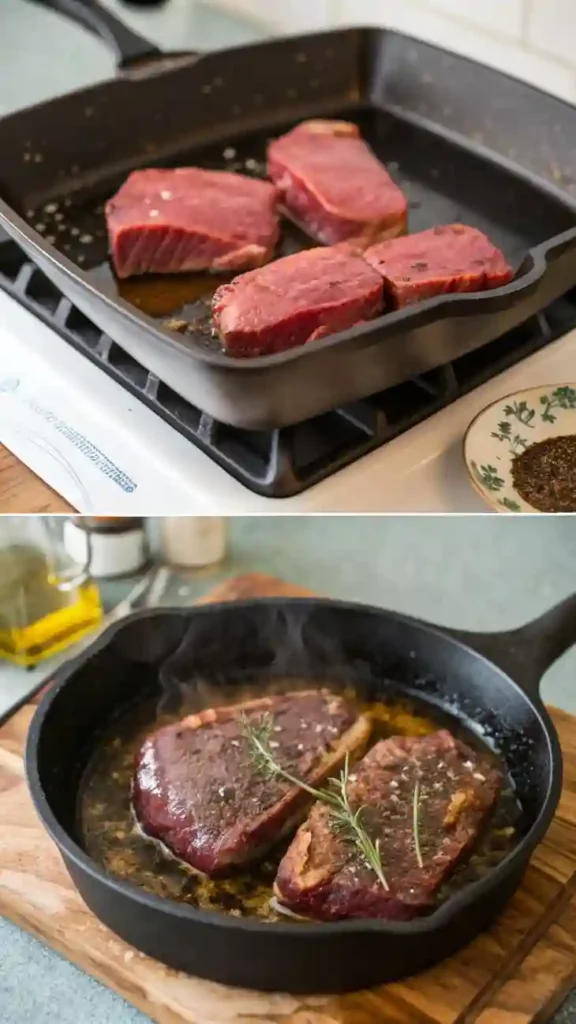
Preheat a grill or heavy skillet until it reaches strong, steady heat.
Cook the steaks briefly on each side, flipping only once. Use a thermometer to guide doneness:
- Rare: 115–120°F
- Medium-rare: 120–125°F
Pull the meat promptly once it reaches temperature. Lean cuts like venison toughen quickly if cooked too long.
Step 6: Rest Before Slicing
Move the steaks to a board and allow them to sit undisturbed for about 8–10 minutes.
Resting keeps the juices inside the meat, ensuring your venison steak recipes stay tender and flavorful.
Slice across the grain and serve immediately.
Cooking Tips & Tricks
Mastering venison steak recipes comes down to respecting the lean nature of the meat. Small adjustments in technique can make a major difference in tenderness and flavor.
Choose the Right Cut
Backstrap and tenderloin are naturally more tender and ideal for quick-cooking venison steak recipes. Thicker cuts (at least 1 inch) are easier to cook without drying out.
Don’t Skip the Marinade
A marinade with oil and mild acid helps tenderize and balance the bold flavor. Even a few hours can noticeably improve texture.
Avoid Overcooking
Venison should be cooked to rare or medium-rare for best results. Because it lacks marbling, cooking past medium can cause dryness.
Use a Thermometer Every Time
Visual cues aren’t reliable with venison. A thermometer ensures precision and protects your venison steak recipes from becoming tough.
Let It Rest Properly
Resting allows internal juices to redistribute. Skipping this step can lead to dry slices.
Slice Against the Grain
Cutting across the muscle fibers shortens them, creating a more tender bite.
With these simple techniques, your venison steak recipes will stay tender every time.
Serving Suggestions
These venison steak recipes shine when paired with sides that complement the rich, slightly earthy flavor of deer meat without overpowering it.
Serve with Roasted Root Vegetables
Roasted carrots, parsnips, or sweet potatoes add natural sweetness that balances the savory depth of venison steak recipes.
Pair with Garlic Mashed Potatoes
Creamy mashed potatoes create a comforting base and soak up any resting juices from the steak beautifully.
Add a Fresh Herb Sauce
A simple chimichurri or herb butter adds brightness and contrast, enhancing the natural flavor of venison steak recipes.
Keep It Simple with a Side Salad
A crisp green salad with a light vinaigrette cuts through the richness and keeps the plate balanced.
Finish with a Citrus Touch
A light squeeze of lemon right before serving can elevate the flavor and bring freshness to your venison steak recipes.
Variations / Substitutions
One of the strengths of venison steak recipes is how flexible they are. You can easily adjust flavors and techniques to suit your preferences while still keeping the meat tender.
Skip the Marinade (If Preferred)
If you enjoy the pure flavor of venison, you can omit the marinade entirely. Simply season generously with salt and pepper before cooking. Just be extra careful with temperature control to keep venison steak recipes tender.
Try a Dry Rub Instead
Swap the marinade for a dry seasoning blend made with garlic powder, smoked paprika, cracked pepper, and dried herbs. This creates a bold crust while preserving the natural flavor of the meat.
Use a Butter Baste
During the final minute of cooking in a skillet, add butter and spoon it over the steak repeatedly. This adds richness to lean venison steak recipes.
Grill Instead of Pan-Sear
Both methods work beautifully. Grilling adds a smoky flavor, while cast iron produces a deeper crust. Choose based on your preference and setup.
Adjust Thickness and Timing
Thinner steaks will require less cooking time. Always adjust by temperature rather than strict minutes when preparing venison steak recipes.
Tenderize Mechanically
If working with a slightly tougher cut, lightly score the surface or use a meat tenderizer before marinating to improve texture.
Nutritional Info
These venison steak recipes are naturally high in protein and lower in fat compared to many traditional beef steak options. Because venison is lean, it provides rich flavor without excess fat.
Estimated Nutrition Per 6 oz Serving
- Calories: 250–300 kcal
- Protein: 45–52g
- Fat: 6–10g
- Carbohydrates: 0–2g (depending on marinade)
- Sodium: Varies based on seasoning
Values may vary depending on marinade ingredients and portion size.
High in Protein, Naturally Lean
Venison steak recipes offer a powerful protein source while remaining lower in saturated fat than many beef cuts.
Great for Balanced Meals
Pairing venison with vegetables and whole grains creates a well-rounded, nutrient-dense meal.
Conclusion
Mastering venison steak recipes comes down to understanding the meat itself. Deer steak is naturally lean and cooks quickly, which means attention and timing matter more than complicated techniques.
When you combine proper marinating, strong heat, and careful temperature monitoring, the result is a steak that’s flavorful, tender, and never dry. Pulling the meat at the right moment and allowing it to pause before slicing makes all the difference in texture.
Whether you’re cooking backstrap on the grill or searing tenderloin in cast iron, these venison steak recipes give you a dependable approach you can repeat with confidence. Once you get the timing right, venison becomes one of the most rewarding steaks to prepare at home.
FAQ
What is a good way to cook venison steak?
The best way to cook venison steak is quickly over high heat while carefully monitoring the internal temperature. Most venison steak recipes recommend grilling or using a hot cast-iron skillet and pulling the meat at rare to medium-rare (around 120–125°F). Overcooking is the most common cause of toughness.
What is a good seasoning for venison steak?
Simple seasoning works best. Salt and freshly ground black pepper enhance the natural flavor. Many venison steak recipes also benefit from garlic, fresh herbs, cracked pepper, or a marinade with olive oil and a mild acid like lemon juice or vinegar.
What tenderizes venison steak?
An acidic marinade helps break down muscle fibers and improve texture. Ingredients like vinegar or citrus juice are commonly used in venison steak recipes to increase tenderness. Proper slicing against the grain after cooking also improves bite tenderness.
Do you have to soak deer steak before cooking?
Soaking is not required, but some people prefer marinating to soften stronger flavors. Instead of soaking in plain liquid, most venison steak recipes recommend a balanced marinade that adds flavor while tenderizing the meat.