

Chicken stock recipe lovers know that nothing compares to the depth and clarity of homemade stock. When simmered slowly with bones, vegetables, and aromatics, the result is a golden liquid that forms the foundation of countless comforting dishes.
This chicken stock recipe focuses on extracting maximum flavor while keeping the broth clean and balanced. The slow simmer draws out richness from the bones and subtle sweetness from the vegetables, creating a stock that enhances soups, sauces, and grains without overpowering them.
If you’ve ever wondered how to make a chicken stock recipe that’s both clear and deeply flavorful, you’re about to learn the method that makes all the difference.
Table of Contents
Table of Contents

Chicken Stock Recipe

Equipment
- 1 Large stockpot Deep enough to fully submerge bones and vegetables.
- 1 Fine-mesh strainer For straining solids to keep the stock clear.
- 1 Ladle Useful for skimming and transferring liquid.
- 1 Storage containers For refrigerating or freezing the stock.
Ingredients
Stock Base
- 1 whole Chicken bones with some skin From one cooked chicken, meat removed.
- 2 whole Celery ribs Cut into chunks, leaves included.
- 2 whole Carrots Cut into chunks.
- 2 whole Onions Cut into chunks.
- 8 cup Cold water Enough to fully cover the ingredients.
Aromatics
- 2 whole Bay leaves Adds subtle herbal depth.
- 1 teaspoon Whole peppercorns Provides gentle warmth.
- 0.5 teaspoon Dried thyme Optional for added aroma.
Instructions
Step 1: Combine ingredients
- Add chicken bones, vegetables, bay leaves, peppercorns, and thyme to a large stockpot. Cover completely with cold water.
Step 2: Heat gradually
- Place the pot over medium heat and slowly bring to a gentle simmer. Avoid boiling to keep the stock clear.
Step 3: Skim and simmer
- Skim off any foam from the surface, reduce heat to low, and simmer gently for about 2 hours.
Step 4: Strain
- Remove from heat and strain the liquid through a fine mesh strainer, discarding solids.
Step 5: Cool and store
- Allow the stock to cool completely. Refrigerate for up to 4 days or freeze for up to 3 months.
Notes
| Calories | Fat | Protein | Carbs |
|---|---|---|---|
| 22 | 0.1 g | 1 g | 5 g |
Why You’ll Love This Recipe
A well-made chicken stock recipe is the backbone of flavorful cooking. This method keeps things simple while delivering depth and clarity.
Builds Real Flavor from the Ground Up
Instead of relying on packaged products, this chicken stock recipe extracts taste directly from bones, aromatics, and time. The slow cooking process allows natural richness to develop fully.
Clean, Balanced Taste
The ingredients are minimal, which keeps the flavor pure. The stock enhances dishes without overpowering them.
Smart Use of Leftovers
Chicken bones and vegetable trimmings that might otherwise be discarded become the base of something incredibly useful.
Essential for Home Cooking
From soups and sauces to rice and braises, this chicken stock recipe improves nearly everything it touches.
Easy to Store and Reuse
Prepare it in batches and portion it for later use, ensuring you always have homemade stock ready to elevate your meals.
Ingredients of the Chicken Stock Recipe
A traditional chicken stock recipe relies on a short list of essential ingredients. The key is balance—nothing complicated, just the right combination to extract clean, deep flavor.
Core Ingredients (The 4 Basics of Stock)
- Chicken bones (with some skin attached) – The foundation of the stock. Bones provide body and richness as they simmer.
- Onion – Adds natural sweetness and depth.
- Carrots – Contribute subtle sweetness and color.
- Celery – Brings gentle earthiness and balance.
These four ingredients form the classic base of a chicken stock recipe.
Aromatics and Seasonings
- Bay leaves – Add mild herbal notes.
- Whole peppercorns – Provide gentle warmth without overpowering the stock.
- Fresh or dried thyme – Enhances the savory profile.
- Cold water – Always start with cold water to draw flavor gradually from the bones.

Using simple, well-balanced ingredients ensures your chicken stock recipe remains clear, flavorful, and versatile.
Equipment / Tools Needed for Chicken Stock Recipe
Making a great chicken stock recipe doesn’t require fancy equipment, but using the right tools ensures clarity and even cooking.
For Simmering
- Large stockpot or Dutch oven – Deep enough to fully submerge the bones and vegetables in water without overcrowding.
- Lid (slightly ajar during simmering) – Helps maintain gentle heat while allowing steam to escape.
For Skimming and Straining
- Fine mesh strainer – Essential for removing solids and keeping the stock clear.
- Large bowl or heat-safe container – To catch the strained liquid.
- Ladle – Makes transferring liquid easier and safer.
For Storage
- Glass jars or airtight containers – For refrigeration.
- Freezer-safe bags or containers – For longer storage in measured portions.
Having these tools ready helps your chicken stock recipe simmer evenly, strain cleanly, and store properly.
Step-by-Step Instructions for Chicken Stock Recipe
To produce a clean and balanced chicken stock recipe, focus on slow extraction rather than rapid cooking. The goal is steady flavor development, not speed.
Step 1: Arrange Everything in the Pot
Add the chicken bones first, then scatter the chopped onion, carrots, and celery around them. Tuck in bay leaves and whole peppercorns so they’re evenly distributed.
Step 2: Cover with Water Before Heating
Fill the pot with cool water until the contents are fully submerged. Starting cold allows the proteins and collagen to release gradually as the temperature rises.
Step 3: Heat Gradually
Place the pot over moderate heat and allow the temperature to increase slowly. Once you see gentle movement at the surface, lower the heat. The liquid should barely tremble, not bubble aggressively.
Step 4: Remove Impurities Early
During the first phase of heating, you may notice cloudy residue forming at the top. Carefully lift it away with a spoon to help maintain clarity in your chicken stock recipe.
Step 5: Maintain a Bare Simmer
Keep the pot at a very low simmer for about two hours. The surface should show only occasional small bubbles. Avoid stirring, which can make the stock cloudy.
Step 6: Separate Liquid from Solids
Turn off the heat and let the stock settle briefly. Pour it slowly through a fine strainer into a clean container, leaving behind bones and vegetables.
Step 7: Chill and Finish
Cool the stock completely. Once refrigerated, any fat will rise and firm up on the surface, making it easy to remove.
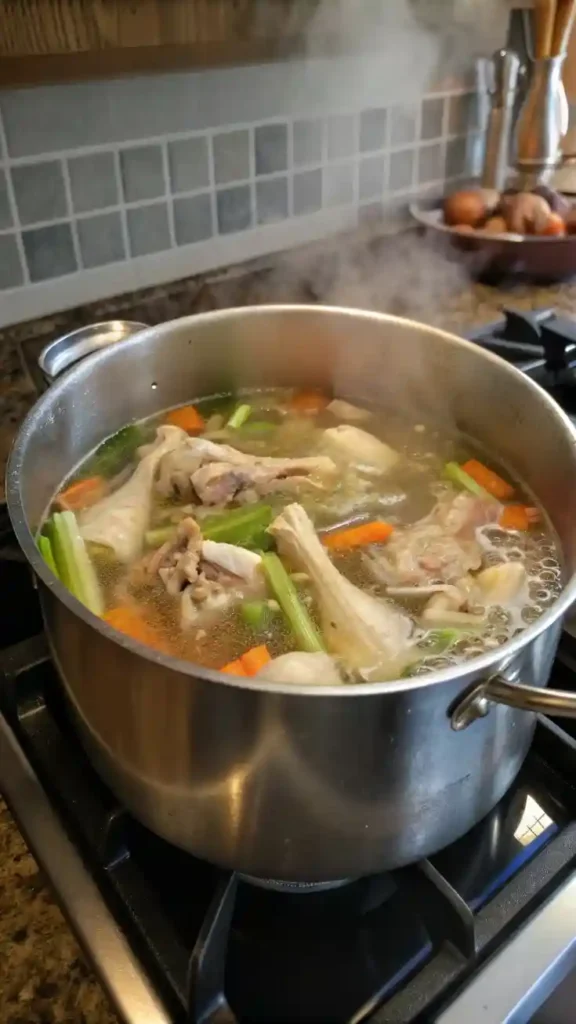
This method produces a clear, aromatic chicken stock recipe that serves as a dependable base for soups, sauces, and braises.
Cooking Tips & Tricks
Mastering a great chicken stock recipe is more about control than complexity. Small adjustments in technique make a noticeable difference in clarity and flavor.
Start Cold, Stay Gentle
Heating too quickly can trap impurities in the liquid. Bring the pot up to temperature gradually and keep the surface calm rather than actively bubbling.
Choose the Right Bones
A mix of bones—especially those with joints—adds structure and natural body to your chicken stock recipe as collagen slowly breaks down.
Keep the Ingredient List Focused
Resist the urge to add extra vegetables or strong spices. Stock should be neutral enough to support many dishes without dominating them.
Leave It Undisturbed
Once the stock begins simmering, avoid stirring. Movement can cloud the liquid and interfere with a clean finish.
Strain Without Pressing
When separating solids from liquid, let gravity do the work. Pressing down on vegetables can push unwanted particles into the stock.
Avoid Certain Add-Ins
Strong flavors like cruciferous vegetables, excess herbs, or salty seasoning blends can overwhelm the stock and reduce its versatility.
Serving Suggestions
Once your chicken stock recipe is finished, it becomes one of the most versatile tools in your kitchen.
Create Flavorful Soups
Use the stock as the starting liquid for classic soups or lighter broths. Its balanced taste supports vegetables, herbs, and proteins without overpowering them.
Strengthen Pan Reductions
After cooking meat or poultry, add a splash of chicken stock to the pan and let it reduce. This captures browned bits and builds a richer sauce.
Enhance Side Dishes
Prepare rice, couscous, or other grains with chicken stock instead of plain water to deepen their flavor.
Support Slow-Cooked Meals
Add the stock to braised dishes or slow-cooked recipes to build layers of savory depth.
Keep Portions Ready
Store the stock in measured containers so you can quickly use it whenever a recipe calls for added liquid.
Variations / Substitutions
This chicken stock recipe can be adapted depending on what you have available and how you plan to use it.
Use Raw or Roasted Bones
Raw bones create a lighter, cleaner stock, while roasted bones produce a deeper color and slightly richer flavor. Choose based on the final dish you’re preparing.
Add Fresh Herbs Instead of Dried
If you have fresh thyme or parsley stems, they can replace dried herbs for a brighter note.
Make It in a Pressure Cooker
To reduce cooking time, prepare the chicken stock recipe in a pressure cooker. High pressure extracts flavor more quickly while still developing body.
Slow Cooker Option
For convenience, combine all ingredients in a slow cooker and let them cook on low for several hours.
Leave It Unsalted
Keeping the stock free of added salt makes it more flexible for future recipes, allowing you to control seasoning later.
These variations let you tailor the chicken stock recipe to your schedule and cooking style while maintaining a clear, balanced result.
Nutritional Info
This chicken stock recipe is naturally light while still providing depth of flavor to your meals. Because it is made primarily from bones, vegetables, and water, it remains low in calories and carbohydrates.
Estimated nutrition per 1 cup serving:
- Calories: approximately 20–25 kcal
- Protein: about 1–2 g
- Carbohydrates: about 4–5 g
- Fat: less than 1 g
Values will vary depending on the amount of fat skimmed and whether additional seasonings are used.
One of the benefits of a homemade chicken stock recipe is that you control the sodium level, making it easier to adjust seasoning later in soups and sauces.
Conclusion
A well-prepared chicken stock recipe is one of the most valuable skills in home cooking. With just bones, vegetables, water, and time, you create a flavorful base that elevates everything from soups to sauces.
What sets this chicken stock recipe apart is its clarity and balance. By keeping the simmer gentle and the ingredients simple, you end up with a golden liquid that enhances dishes without overwhelming them.
Once you make your own chicken stock recipe, it becomes a staple you’ll want to keep on hand at all times—ready to transform everyday meals into something richer and more satisfying.
FAQ
How do you make homemade chicken stock?
To make a homemade chicken stock recipe, combine chicken bones, onion, carrots, and celery in a large pot. Cover with cold water, slowly bring to a gentle simmer, skim off any impurities, and cook on low heat for about two hours. Strain the liquid and cool before storing.
What is the secret to a good chicken stock?
The secret to a great chicken stock recipe is maintaining a very gentle simmer rather than boiling. Slow extraction preserves clarity and develops balanced flavor. Using bones with connective tissue also helps create body and richness.
What are the 4 basic ingredients of stock?
The four foundational ingredients in a traditional chicken stock recipe are:
Chicken bones
Onion
Carrots
Celery
These create the base flavor profile known as mirepoix.
What not to put in chicken stock?
Avoid strong vegetables like broccoli or cabbage, heavily salted seasonings, and overpowering spices. These can dominate the flavor and limit how versatile your chicken stock recipe will be in future dishes.