

Beef bone broth recipe success comes from patience, preparation, and understanding how bones release flavor and structure over time. When handled correctly, beef bones slowly transform water into a deeply savory broth with body, clarity, and that signature gelatin-rich texture that sets when cooled.
This easy beef bone broth recipe focuses on technique rather than shortcuts. Roasting the bones builds depth, gentle simmering extracts collagen, and careful skimming keeps the broth clean instead of cloudy. The result is a rich, nourishing broth that feels intentional—one that works just as well for sipping on its own as it does for soups, stews, and everyday cooking.
Table of Contents
Table of Contents
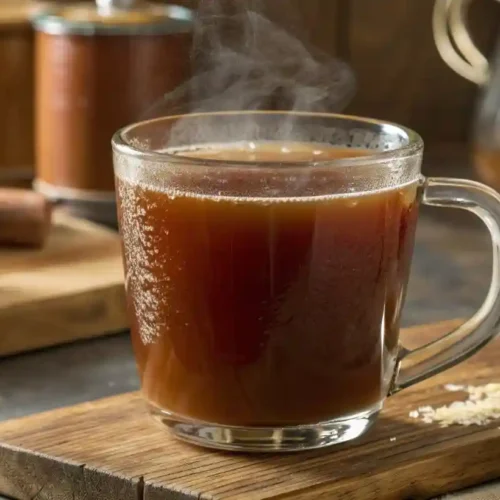
Easy Beef Bone Broth Recipe

Equipment
- 2 Large stockpot Holds bones and water for long, gentle simmering.
- 2 Roasting pans Used to roast bones and vegetables for deeper flavor.
- 1 Fine-mesh strainer Separates finished broth from solids.
- 1 Ladle For skimming and transferring broth.
Ingredients
Bones
- 10 pound Beef bones (mixed marrow and joint bones) Provide flavor, collagen, and gelatin.
Vegetables
- 4 large Carrots, chopped Add mild sweetness.
- 2 medium Onions, quartered Build savory depth.
- 2 head Garlic heads, halved Add mellow aromatic flavor.
- 6 stalk Celery stalks, chopped Balance the broth.
Aromatics
- 4 leaf Bay leaves Add background flavor.
- 0.25 cup Whole black peppercorns Provide gentle warmth.
- 2 tablespoon Apple cider vinegar Helps extract collagen from bones.
Instructions
Step 1: Prepare the bones
- Cover beef bones with cold water, bring to a boil briefly, then drain and rinse to remove impurities.
Step 2: Roast for flavor
- Roast bones and vegetables until deeply browned to develop rich flavor.
Step 3: Simmer gently
- Transfer everything to stockpots, add aromatics and water, and simmer gently for many hours.
Step 4: Strain and cool
- Strain the broth, cool completely, and refrigerate until gelatin sets.
Why You’ll Love This Recipe
This beef bone broth recipe is built for people who want real depth and structure, not a thin or one-note stock. Every stage of the process serves a purpose, from preparing the bones properly to allowing enough time for collagen to release naturally.
One reason this recipe stands out is the gelatin-rich result. When cooled, the broth sets instead of staying watery, which is a sign that the bones were handled correctly and simmered long enough. That texture brings richness to soups and sauces without needing additives.
Another highlight is the clean, balanced flavor. By blanching, roasting, and simmering gently, the broth develops depth without bitterness or cloudiness. The vegetables support the beef flavor rather than competing with it.
Most importantly, this beef bone broth recipe is dependable. Once you understand the process, the method works the same way every time, producing a broth that feels nourishing, versatile, and worth the long simmer.
Ingredients of the Beef Bone Broth Recipe
This beef bone broth recipe relies on ingredients chosen for how they behave over long cooking times. Each component supports extraction, clarity, or depth, rather than quick flavor.
Core Ingredients
- Beef bones (about 10 pounds, mixed types)
Use a combination of marrow bones and joints with connective tissue. This mix is essential for building body and achieving the gelatin set that defines a proper beef bone broth recipe. - Carrots (4 large), cut into large chunks
Added for subtle sweetness that rounds out the beef without dominating the broth. - Onions (2 medium), quartered
Provide backbone flavor and natural depth as they soften and release sugars slowly. - Garlic (2 whole heads), halved crosswise
Adds savory complexity that mellows during the long simmer. - Celery stalks (6), cut into large pieces
Contributes balance and a clean, aromatic base note.
Aromatics and Seasoning
- Bay leaves (4)
Add background structure to the broth’s aroma. - Whole black peppercorns (¼ cup)
Provide gentle warmth without clouding the broth. - Apple cider vinegar (2 tablespoons)
Helps draw minerals and collagen from the bones during the simmering process.
Optional Flavor Accents
- Star anise or cinnamon sticks (optional, whole)
Used sparingly to add subtle warmth without overpowering the beef flavor.

Ingredient Notes
- Larger vegetable cuts prevent over-extraction and bitterness.
- Whole spices keep the broth clean and easy to strain.
- The quality and variety of bones matter more than any seasoning in a beef bone broth recipe.
These ingredients work together over time to produce a beef bone broth recipe with depth, clarity, and proper gelatin structure.
Equipment / Tools Needed for the Beef Bone Broth Recipe
This beef bone broth recipe depends on steady heat, capacity, and cleanliness more than specialized gadgets. Using the right equipment makes long simmering safer, more controlled, and easier to manage.
Essential Equipment
- Large stockpot (8–12 quarts)
A deep, heavy pot allows the bones to stay fully submerged while simmering gently for many hours without rapid evaporation. - Roasting pans
Used to roast the bones and vegetables evenly before simmering. Roasting is critical for developing the deep flavor associated with a proper beef bone broth recipe. - Fine-mesh strainer
Needed to separate the finished broth from bones, vegetables, and spices while keeping the liquid clear. - Large spoon or ladle
Used for skimming foam and excess fat during simmering to maintain clarity.
Helpful Extras
- Tongs
Make it easier to move hot bones safely between pans and pots. - Heat-safe containers
Useful for cooling, storing, or freezing the finished broth in manageable portions. - Lid (slightly ajar use)
Helps control evaporation while allowing impurities to rise during long cooking.
Having these tools ready ensures the beef bone broth recipe can simmer slowly, stay clean, and finish with the clarity and body it’s meant to have.
Step-by-Step Instructions for the Beef Bone Broth Recipe
This beef bone broth recipe is best understood as a slow extraction process rather than a checklist. Each phase prepares the bones to release structure, flavor, and gelatin cleanly over time.
Phase 1: Prepare the bones for extraction
Place the beef bones in a large pot and cover them fully with cold water. Heat until the water reaches a strong boil, then immediately discard the water and rinse the bones. This reset removes surface residue that would otherwise dull flavor and cloud the broth.
Phase 2: Build roasted flavor
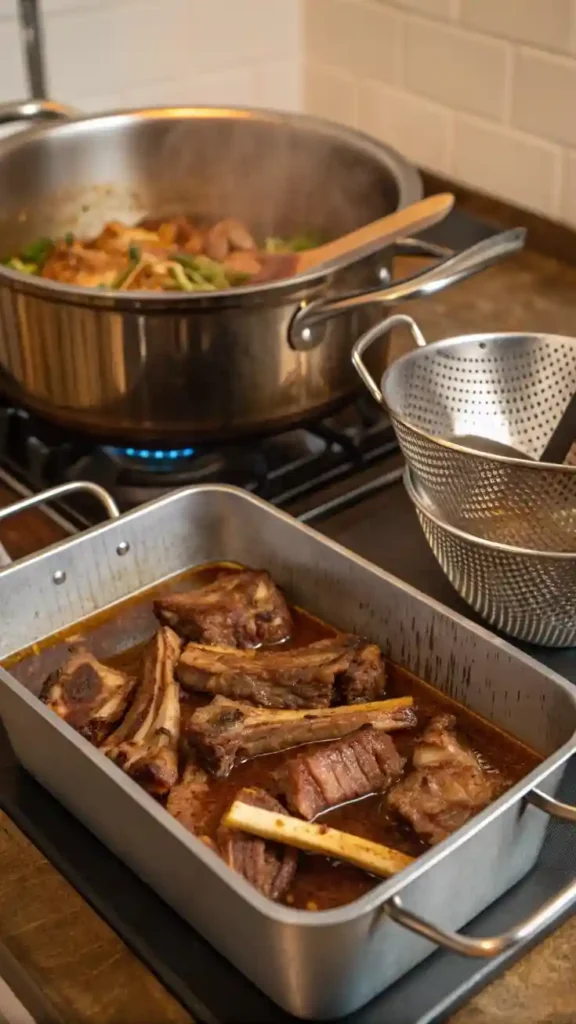
Arrange the rinsed bones and vegetables in roasting pans with space between them. Roast until the surfaces darken and deepen in color. The goal is strong browning, which later translates into a richer, darker broth.
Phase 3: Recover concentrated flavor
Transfer the roasted contents into clean stockpots. Add a small amount of water to the roasting pans and loosen the caramelized residue, then pour that liquid into the pots. These concentrated drippings are essential to a full-bodied beef bone broth recipe.
Phase 4: Set the extraction environment
Add the aromatics and vinegar to the pot, then pour in cold water until everything is submerged. Beginning with cold water encourages gradual collagen release instead of forcing it out too quickly.
Phase 5: Stabilize the heat
Bring the pot up slowly until gentle movement appears on the surface, then reduce heat immediately. The liquid should remain calm, not rolling. This steady temperature protects clarity and structure.
Phase 6: Allow time to work
Maintain this low simmer for many hours, occasionally removing foam or surface fat. As the liquid reduces slightly, add water only to keep bones covered. This long, uninterrupted period is what gives the broth its gelatin set.
Phase 7: Separate liquid from solids
Once extraction is complete, pour the broth through a fine strainer into a clean container. At this stage, the bones and vegetables have given up their value and can be discarded.
Phase 8: Chill and evaluate
Cool the broth fully before refrigeration. As it chills, it should thicken and set. Excess fat can be lifted off once solid if a cleaner finish is preferred.
Handled this way, the beef bone broth recipe develops clarity, depth, and structure without rushing or clouding—exactly what defines properly made bone broth.
Cooking Tips & Tricks
This beef bone broth recipe rewards attention to detail more than constant action. Small decisions during the long simmer have a major effect on clarity, flavor, and how well the broth sets once cooled.
Keep the liquid calm
The broth should never boil aggressively. Active boiling agitates proteins and fat, which leads to a cloudy finish. A barely moving surface produces a cleaner, more refined broth.
Skim with intention, not constantly
Remove foam and excess fat early in the process, then skim only when needed. Over-skimming later can strip flavor and disrupt the natural balance of the broth.
Don’t rush reduction
Evaporation happens slowly over time. Letting the broth reduce naturally concentrates flavor without forcing bitterness or heaviness.
Bone coverage matters
Bones should remain submerged throughout cooking. If liquid drops, add small amounts of hot water rather than cold to avoid temperature shock.
Trust the chill test
A properly made beef bone broth recipe will thicken when fully cold. If it firms up in the refrigerator, the extraction worked—even if it looks thin while hot.
Avoid over-seasoning
Season lightly, if at all, during cooking. Bone broth is a foundation, and it’s easier to adjust salt later when using it in other dishes.
Using these techniques helps the beef bone broth recipe stay clear, rich, and structurally sound from start to finish.
Serving Suggestions
This beef bone broth recipe is versatile by design, which means how you serve it depends on whether you want it to stand alone or support other dishes. Because the broth is clean and concentrated, simple uses work best.
Enjoy It on Its Own
Warm the broth gently and sip it plain. Serving it this way highlights the depth and body developed during the long simmer, especially when the broth has set firmly after chilling.
As a Cooking Base
Use the broth as a foundation for soups, stews, or grain-based dishes. Its gelatin structure adds body and richness without needing extra fats or thickeners.
Light Meal Pairing
Serve the broth alongside simple foods such as rice, vegetables, or lean proteins. The broth adds warmth and nourishment without overwhelming the plate.
Reheating Tips
Heat the broth slowly over low heat. Rapid boiling can disturb the texture and dull the flavor developed during cooking.
Served thoughtfully, this beef bone broth recipe works as both a comforting drink and a powerful building block for everyday meals.
Variations / Substitutions
This beef bone broth recipe can be adjusted without compromising clarity or gelatin structure, as long as the slow, gentle extraction process stays the same. Variations should support the broth, not distract from it.
Bone Selection Changes
- More marrow bones: Increases richness and mouthfeel.
- More joint or knuckle bones: Boosts gelatin content and firmness when chilled.
- Mixed cuts: Using several bone types creates the most balanced beef bone broth recipe.
Vegetable Adjustments
Vegetables can be simplified or reduced if you want a more neutral broth. Using fewer aromatics results in a cleaner flavor that works better as a base for other recipes.
Spice Modifications
Whole spices can be adjusted or omitted entirely. Keeping spices whole and minimal prevents bitterness and keeps the broth versatile.
Cooking Method Options
- Slow cooker: Produces consistent results when cooked on low for an extended period.
- Stovetop: Offers the most control over heat and skimming.
- Pressure cooker: Shortens cooking time but may produce a slightly lighter body.
Vinegar Alternatives
If apple cider vinegar isn’t available, a mild acidic substitute can be used in small amounts. The purpose is extraction, not flavor.
These variations allow the beef bone broth recipe to adapt to different needs while preserving the qualities that define a properly made broth.
Nutritional Info
This beef bone broth recipe is valued less for calories and more for what it contributes structurally and nutritionally. Because the broth is made primarily from bones, connective tissue, and water, its nourishment comes from long extraction rather than added ingredients.
How This Broth Fits Into Daily Use
Beef bone broth is typically consumed in smaller amounts, either on its own or as part of another dish. Its role is supportive—adding protein, minerals, and body without relying on fats, sugars, or starches.
Nutritional Characteristics (Approximate)
- Protein: Present in a highly digestible form, coming from collagen and gelatin
- Fat: Low once excess fat is removed after chilling
- Carbohydrates: Essentially none
- Calories: Naturally low relative to its richness and mouthfeel
Why It Feels Satisfying
The gelatin structure gives the broth a thicker texture, which contributes to satiety even without high calorie content. This is one reason a well-made beef bone broth recipe feels nourishing despite its simplicity.
Adjusting Nutrition Through Preparation
- Skimming and chilling remove excess fat if a lighter broth is preferred.
- Using more joint bones increases gelatin without raising calories.
- Seasoning lightly keeps the broth adaptable for different dietary needs.
Prepared this way, the beef bone broth recipe delivers concentrated nourishment and structure while remaining clean, simple, and flexible for everyday use.
Conclusion
This beef bone broth recipe is built on patience, restraint, and respect for the process rather than shortcuts. By preparing the bones carefully and allowing time to do the work, the broth develops depth, clarity, and a natural gelatin structure that can’t be rushed.
What makes this beef bone broth recipe reliable is its consistency. When the heat stays gentle and the simmer remains steady, the results are predictable—rich flavor, clean finish, and a broth that firms up when chilled. Each batch becomes a dependable base you can return to for cooking or sipping.
If you’re looking for a beef bone broth recipe that prioritizes technique over trends and produces lasting, nourishing results, this method offers a solid foundation that rewards the time invested.
FAQ
How to make proper beef bone broth?
A proper beef bone broth recipe starts with preparing the bones correctly and allowing enough time for extraction. Cleaning the bones first, roasting them for depth, and then simmering gently for many hours helps release collagen and minerals without clouding the broth.
Can I just boil beef bones for broth?
You can boil beef bones, but boiling alone produces a thinner, less structured result. In a true beef bone broth recipe, aggressive boiling is avoided. Gentle simmering over a long period is what allows gelatin to form and gives the broth its body.
What are the best bones to use for beef bone broth?
The best results come from using a mix of bones. Marrow bones add richness, while joints and knuckles contribute collagen that helps the broth set when chilled. Combining bone types creates a more complete beef bone broth recipe.
Why do I feel weird after drinking bone broth?
Some people notice reactions because bone broth is rich and concentrated. Drinking large amounts too quickly, especially on an empty stomach, can feel intense. Starting with small portions and warming the broth gently often helps the body adjust.